EMAIL US
sales@scanneroptics.com
A laser welding system is an advanced industrial joining solution that uses a high-energy-density laser beam as the heat source to fuse materials with exceptional precision. Through precise control of beam power, focus, and motion, the laser beam delivers energy accurately to the welding zone within a very short time, enabling high-efficiency and high-qualiity material joining.
Compared with conventional welding methods, laser beam welding offers significant advantages, including a small heat-affected zone (HAZ), low thermal distortion, and excellent compatibility with automation. As a result, laser welding systems are widely used in automotive manufacturing, electronics, aerospace, medical devices, and new energy industries.
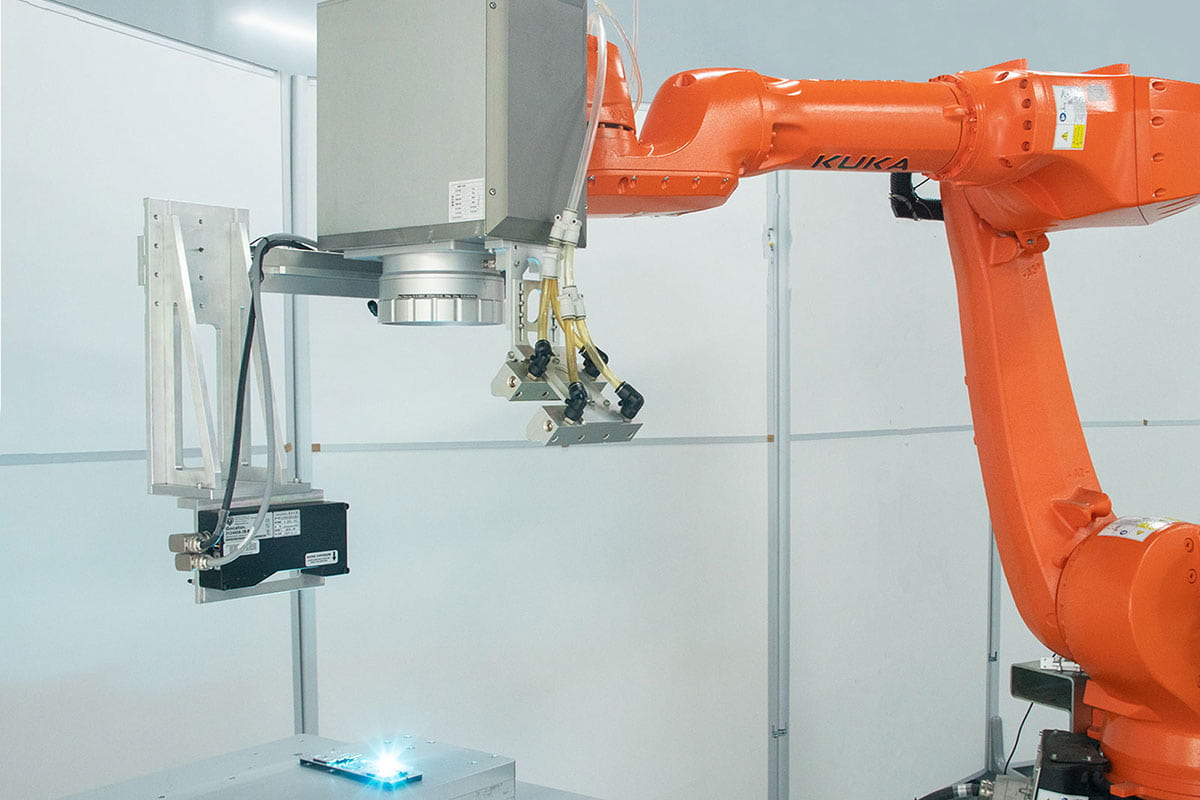
Depending on how the laser beam interacts with the material, a laser welding system typically operates in one of two fundamental modes: conduction welding or keyhole (deep penetration) welding.
In conduction welding, the laser beam energy is absorbed by the material surface and converted into heat, which then diffuses into the material through thermal conduction. The localized area reaches the melting temperature and forms a smooth and stable weld seam.
This mode allows precise heat input control and minimal thermal impact, making it suitable for thin materials, precision components, and heat-sensitive applications. Conduction welding is commonly applied in electronics manufacturing and fine metal joining where dimensional accuracy is critical.
When the laser power density in laser welding exceeds a certain threshold, the material surface rapidly vaporizes and forms a vapor-filled keyhole. This keyhole enables the laser beam to penetrate deep into the material, significantly improving energy coupling efficiency and producing deep, narrow weld seams.
Keyhole welding delivers high joint strength and reliability and is widely used in structural applications, including automotive body manufacturing and aerospace components. It is particularly effective for laser welding stainless steel and other high-strength metals that require deep penetration and stable weld quality.
Fiber laser welding is currently the most widely used and technologically mature solutions in industrial manufacturing. Fiber lasers typically operate at a near-infrared wavelength of approximately 1 μm and offer high electrical-to-optical efficiency, excellent beam quality, compact system design, and low maintenance requirements.
These laser welding systems support both conduction and keyhole welding modes and can be easily integrated with galvo scanner systems, laser beam expander, F-theta lens, and automated production lines. Fiber-based systems are widely applied in automotive manufacturing, battery manufacturing, sheet metal fabrication, and structural welding, including laser welding aluminum and laser welding stainless steel components.
Typical materials include carbon steel, stainless steel, aluminum alloys, and selected copper alloys.
Battery Pole Welding
Green lasers operate in the visible wavelength range of approximatey 500–560 nm. Copper exhibits significantly higher absorption at around 515 nm compared to near-infrared wavelengths, resulting in improved energy coupling efficiency and reduced sensitivity to surface oxidation.
Green laser welding can significantly lower the threshold power required for deep penetration copper welding, reducing spatter and improving process stability. When combined with beam oscillation, controlled defocusing, and optimized power modulation, green laser welding delivers more uniform weld seams and fewer welding defects.
This technology is particularly suitable for copper and copper alloy applications in electronics and new energy systems.
Blue lasers operate in the wavelength range of 400–500 nm and are typically generated using gallium nitride (GaN) semiconductor laser technology. These lasers can directly emit light at around 450 nm without frequency doubling, resulting in a compact structure and high electrical-to-optical efficiency.
Compared with infrared fiber lasers, metal absorption at 450 nm is significantly higher, especially for highly reflective materials such as copper and gold. As a result, blue laser welding can dramatically reduce the required laser power while maintaining stable welding performance, making it an efficient solution for precision welding of reflective metals.
Fixed beam welding refers to a process in which the laser beam remains stationary while the workpiece is moved or rotated. This method is commonly used for cylindrical components, pipes, and rotational parts, ensuring continuous and uniform weld seams.
With a simple system structure and relatively low equipment investment, fixed beam welding is suitable for small- to medium-scale production lines and repetitive industrial welding tasks.
Multi-beam or hybrid welding uses multiple laser beams or a combination of different laser wavelengths simultaneously to complete the welding process. This approach improves welding stability, reduces spatter, and enhances weld quality, particularly for high-reflectivity materials.
Such laser welding systems are widely used in applications requiring high reliability, including motor manufacturing, busbar welding, and precision electronic components.
Galvo Laser welding uses high-speed galvanometer scanner to dynamically guide the laser beam along the welding path. This method enables high welding speed, flexible weld geometries, and precise heat input control.
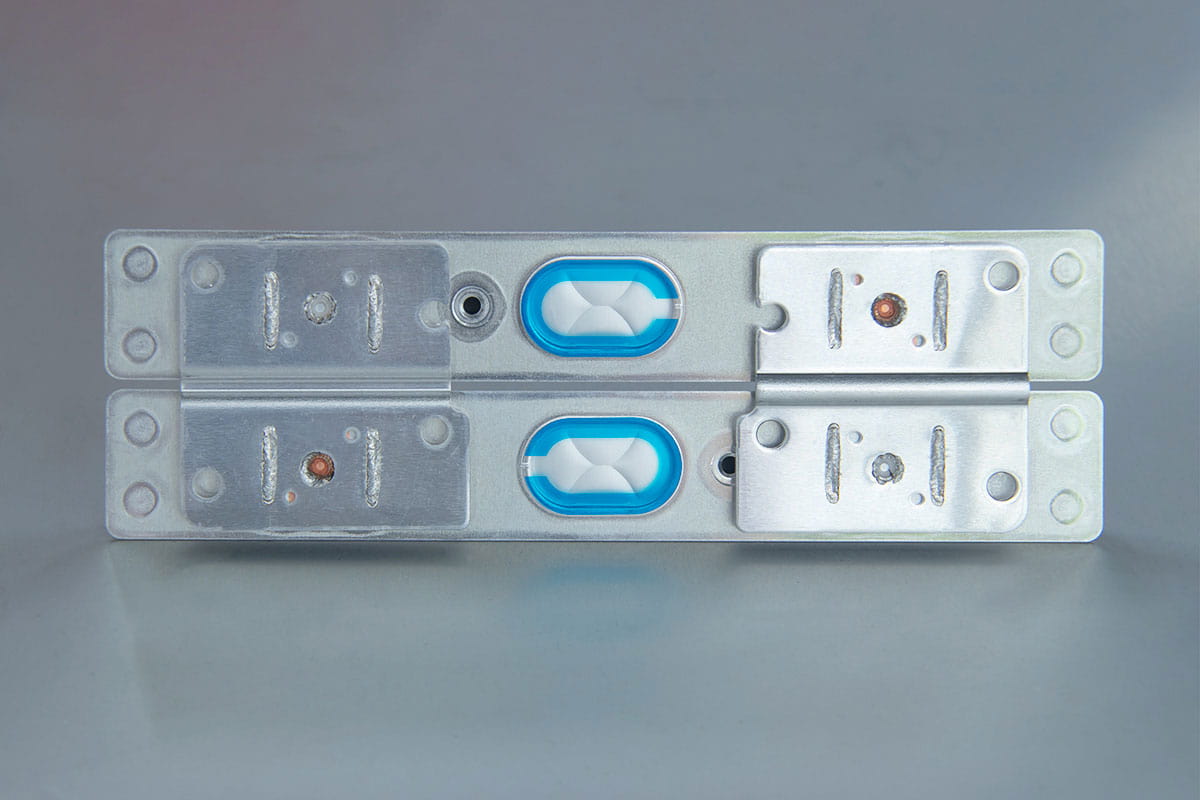
Battery pole welding appearance
Galvo laser welding systems are especially suitable for battery manufacturering, microelectronic assemblies, and precision metal components. They are also well suited for integrated manufacturing processes that combine laser welding, laser ablation, and cutting within a single automated workstation.
 zh-CN
zh-CN
 English
  日本語
日本語  한국어
한국어  français
  Deutsch
  Español
  italiano
  русский
  português
  tiếng việt