EMAIL US
sales@scanneroptics.com
Traditional long-pulse lasers generate significant thermal effects, often causing material melting and evaporation, which limits machining precision. With the development of short-pulse and ultrashort-pulse lasers, laser energy can be delivered to the material surface within an extremely short time, achieving instantaneous ablation with minimal thermal impact on the surrounding material. This high-precision, low-thermal-damage processing method has enabled ultrafast lasers to find wide applications in industrial micromachining. By combining ultrafast lasers with high-speed galvo scanning systems, efficient and precise laser micromachining systems are realized.
A laser micromachining system is a high-precision procssing platform based on high-energy laser beams, capable of accurately removing, cutting, drilling, or surface-treating a wide range of materials at the micrometer or even sub-micrometer scale. By integrating advanced short-pulse lasers (nanosecond, picosecond, or femtosecond) with high-speed galvo scanning systems, these systems achieve non-contact, high-precision, and high-efficiency microstructure processing.
Laser micromachining systems typically use short-pulse lasers, including nanosecond, picosecond, and femtosecond lasers:
Nanosecond lasers: With relatively long pulse widths, these lasers remove larger amounts of material and are suitable for batch processing. However, the larger heat-affected zone may cause melting or spattering at the edges, limiting their use in high-precision micromachining. Nevertheless, they remain practical for applications where efficiency is prioritized.
Picosecond lasers: With extremely short pulses, these lasers achieve nearly instantaneous material evaporation, producing a small heat-affected zone and smooth edges. They are ideal for high-precision micromachining of metals, ceramics, and glass.
Femtosecond lasers: With the shortest pulse duration, these lasers allow sub-micrometer-level precise machining with almost no thermal effect or material melting. They are especially suitable for complex microstructures, precision optical components, and thermally sensitive materials.
Although picosecond and femtosecond lasers remove less material per pulse, their exceptional machining precision, minimal thermal impact, and superior edge quality make them indispensable in micromachining, research, and high-end industrial manufacturing.
In a laser micromachining system, the galvo scannner system is one of the core components enabling high-speed, high-precision processing. The galvo system uses galvo mirrors to steer the laser beam along a predetermined path, allowing for the creation of complex patterns and microstructures on the material surface.
Key Features and Advantages:
High-speed scanning: Galvos can move the laser beam at frequencies from several kHz to tens of kHz, significantly improving processing efficiency. This is ideal for large-area microstructures or repetitive patterns.
High-precision positioning: Modern galvos combined with closed-loop control and high-resolution optical measurement can achieve micrometer or even sub-micrometer machining accuracy.
Flexible optical path design: Through multi-mirror arrangements and focal length adjustments, systems can handle various applications such as micro drilling, microchannel etching, or surface texturing.
High-performance laser micromachining systems often include automatic focus and beam control to ensure consistent results on materials with varying thickness or curved surfaces. Optical path design also considers laser power distribution, spot uniformity, and thermal accumulation control to maximize machining quality and repeatability.
Rapid advancements in short-pulse laser technology have made laser micromchining systems widely applicable in industry, with new applications emerging continuously. The main application areas currently include:
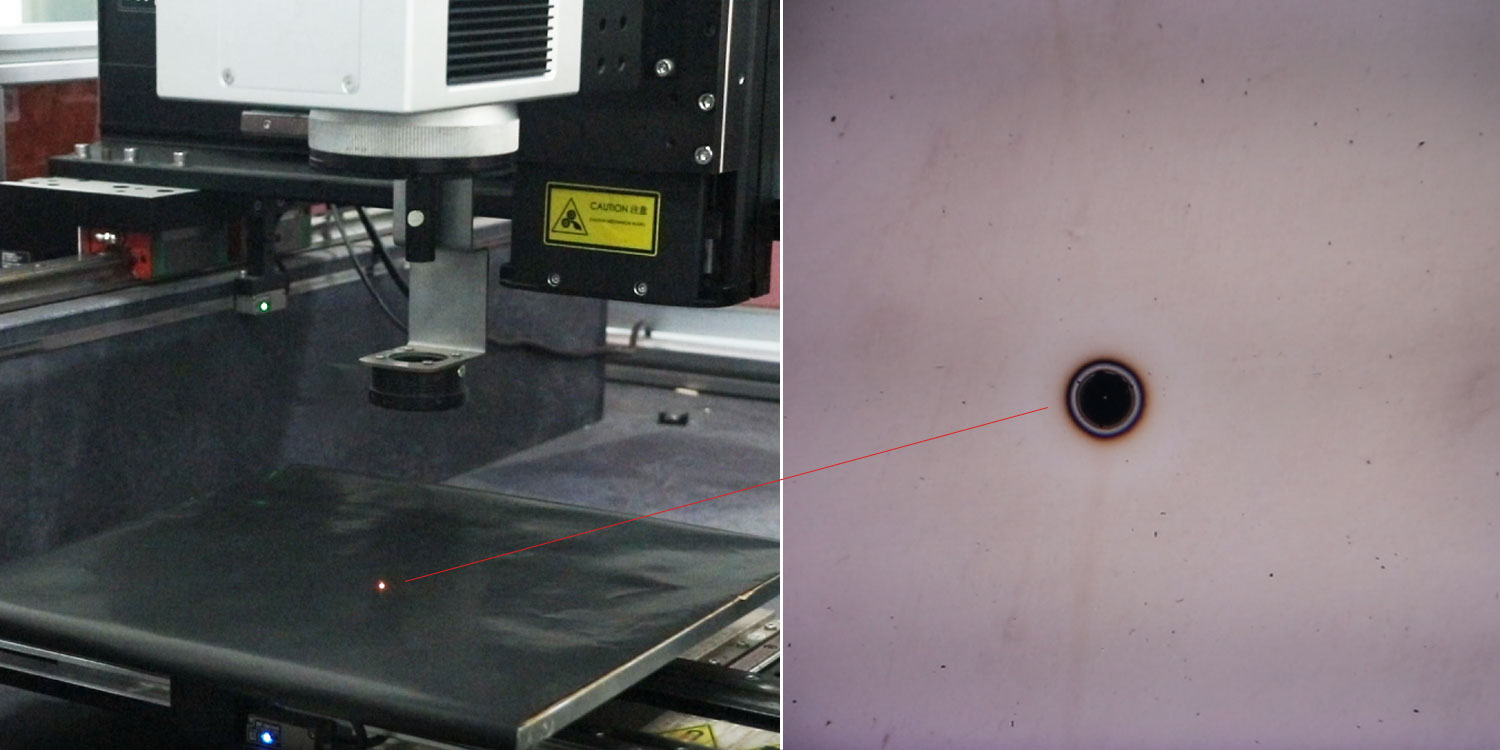
Laser drilling is a micro-machining process that removes material precisely using high-energy pulses and is widely used in electronic packaging and high-density interconnect manufacturing. For printed circuit boards and advanced substrates, high-density microhole arrays with diameters around 40–100 μm are often required, imposing stringent demands on machining precision and thermal control.
Picosecond lasers achieve near-“cold machining” through ultrashort pulses, effectively reducing heat diffusion and ensuring hole consistency and wall quality. This process is suitable for ceramics, plastic films, semiconductors, metal films, sapphire, and other materials, enabling high-quality microhole fabrication.
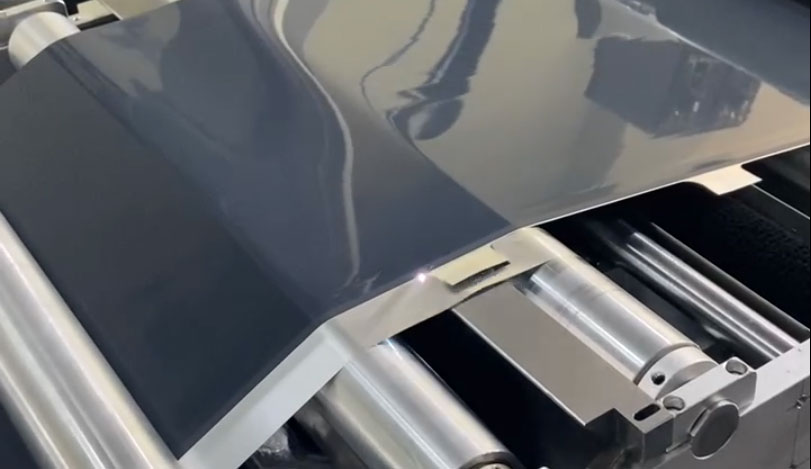
Laser scribing and cutting are precision processes based on selective material removal or stress control, with important applications in microelectronics, precision optics, and micro-mechanics. Compared to traditional mechanical methods, ultrashort-pulse lasers offer non-contact processing, minimizing burrs, thermal deformation, and mechanical stress concentration.
Picosecond lasers can create high-precision scribe lines or micro-scale cuts on material surfaces. The extremely short pulse duration suppresses heat-affected zone expansion, producing clean edges and consistent dimensions. This technique works with metal films, ceramics, glass, semiconductors, and polymer films, allowing straight lines, curves, or complex 2D structures to be cut with high accuracy.
Optimizing scanning paths and focus control allows laser cutting to maintain high speed while minimizing material damage, providing reliable high-precision processing for electronic components, microfluidic chips, and optical assemblies.
Laser micromachining can also create micro- to sub-micrometer surface textures and patterns, significantly altering material properties. Using picosecond or femtosecond lasers, fine structures can be formed on metals, ceramics, or polymers to achieve hydrophobic, hydrophilic, or other functional effects. For example, mimicking the microstructure of lotus leaves can cause liquids to roll off quickly. By adjusting laser power, scan speed, and repetition rate, the size and shape of textures can be precisely controlled to achieve desired functionalities.
Industrial applications include creating microstructures on engine parts or fuel tanks to reduce friction and wear, enhancing metal-to-plastic bonding strength, and fabricating functional surfaces with self-cleaning, anti-fouling, or fluid-guiding properties. Ultrafast lasers’ precision and minimal thermal effect allow high repeatabiliy and controllable microstructure fabrication while maintaining material performance.
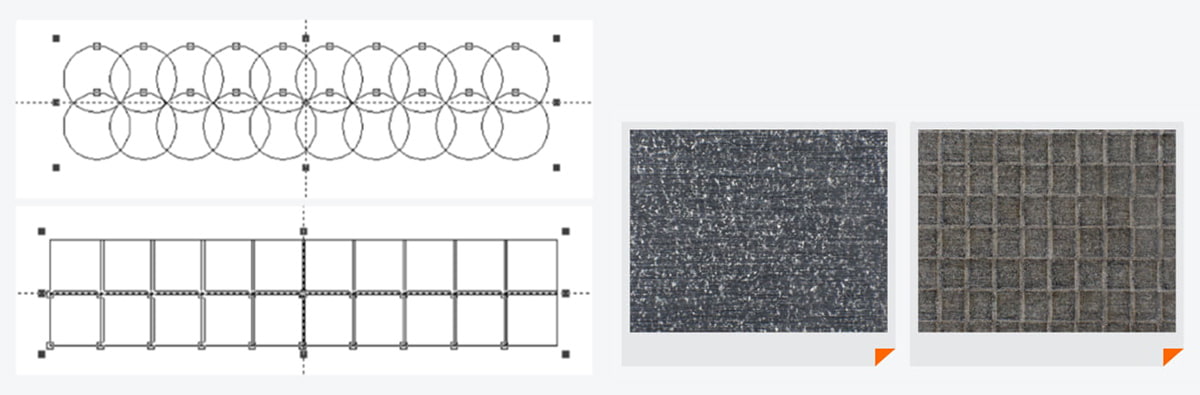
Laser marking and engraving involve ablating material to create three-dimensional shapes. While the processing size may be larger than typical micromachining, the required precision still reaches the micrometer or sub-micrometer scale, making it a high-precision laser application.
Picosecond lasers are particularly suitable for hard materials, such as polycrystalline diamond (PCD) cutting tools. Non-contact laser processing allows high-precision engraving while preserving the integrity of the tool material, enabling complex geometries to be fabricated. This method significantly improves processing efficiency and repeatability, providing a precision machining solution that is challenging for traditional mechanical methods.
 zh-CN
zh-CN
 English
  日本語
日本語  한국어
한국어  français
  Deutsch
  Español
  italiano
  русский
  português
  tiếng việt