EMAIL US
sales@scanneroptics.com
In the laser industry, achieving micron or sub-micron accuracy isn’t optional—it’s essential. Applications such as laser marking, micro-welding, semiconductor lithography, and precision micromachining demand that laser beams land exactly where intended, every single time. Behind this capability lies a critical enabling technology: the optical encoder.
An optical encoder converts mechanical motion (rotary or linear) into high-fidelity electrical signals, enabling closed-loop feedback for motion control systems. In modern laser systems, they function as the “eyes” that guide beam steering, stage motion, and path alignment.
An optical encoder is a device that uses a light source, a coded scale, and photodetectors to measure position, angle, speed, or direction of a moving component. By transforming mechanical motion into electronic data, encoders allow laser systems to achieve micron or even nanometer-level accuracy.
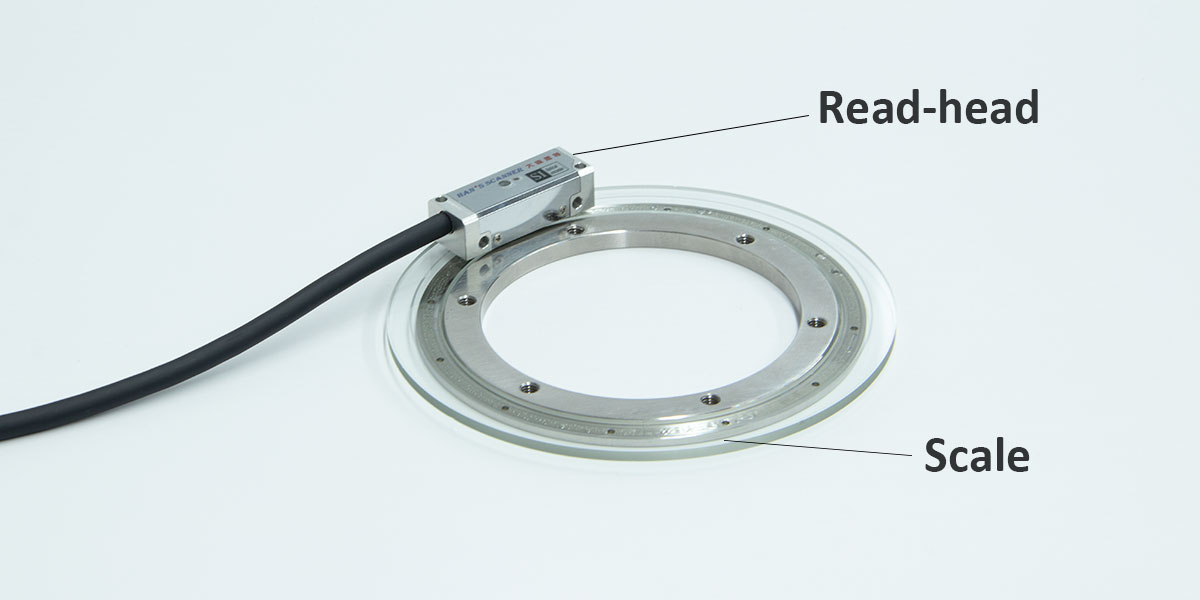
Optical encoders typically consist of:
Light source (LED or laser diode)
Rotary disk or linear grating with coded patterns
Photodetectors to capture light interruptions
Signal processing electronics to convert signals into readable data
When the shaft or stage moves, the encoded pattern modulates the light, producing digital signals. These signals are then interpreted by the control system to monitor real-time position and speed.
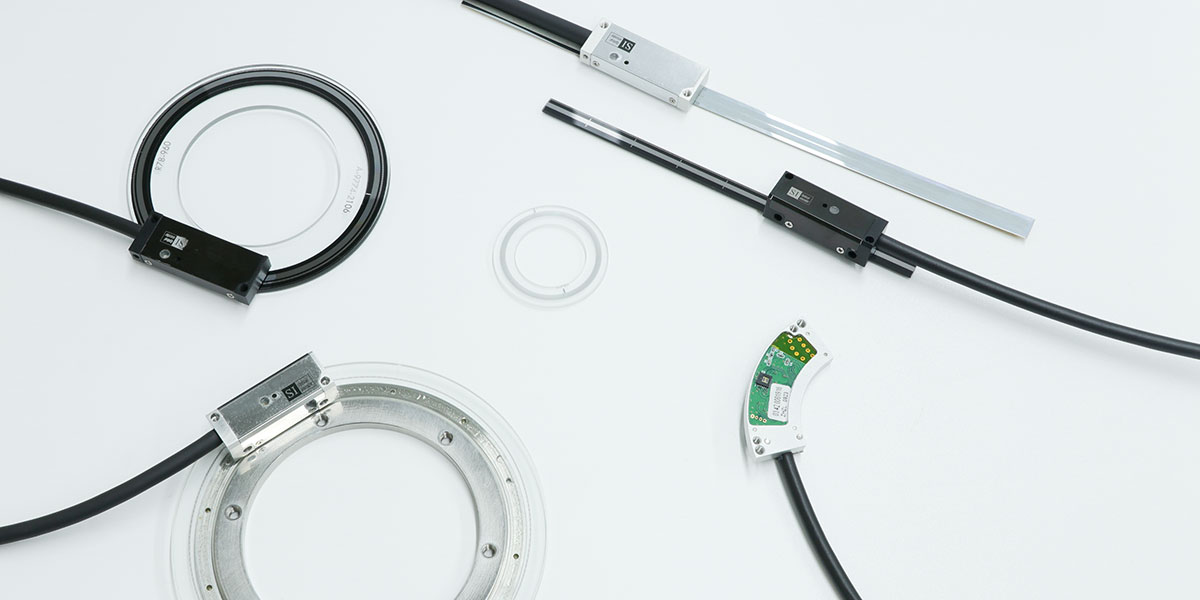
Rotary Encoders – Integrated with galvo motors to monitor mirror angles in scanning heads.
Linear Encoders – Installed on precision stages for laser cutting, lithography, and semiconductor manufacturing.
Incremental Encoders – Output pulse sequences to indicate relative movement, ideal for high-speed scanning.
Absolute Encoders – Provide exact position values, ensuring accuracy even after power loss.
Laser Marking & Engraving – Encoders inside galvo scanners guarantee precise placement of text, barcodes, and logos.
Laser Cutting & Welding – Stage-mounted encoders control beam paths for clean cuts and consistent weld seams.
Additive Manufacturing (3D Printing) – Encoders synchronize layer alignment for reliable part accuracy.
Semiconductor & PCB Fabrication – Linear encoders achieve nanometer-level wafer positioning.
Laser Projection & Micromachining – Dynamic beam steering relies on encoder feedback to avoid distortion.
High resolution and accuracy for demanding processes.
Real-time feedback for stable beam steering at high speeds.
Non-contact operation, reducing mechanical wear and drift.
Scalable use cases, from compact galvo heads to large CNC platforms.
When choose an optical encoder, focus on these four key parameters:
Resolution: The smallest angular increment that can be distinguished within one revolution, usually expressed in bits. A 13-bit encoder provides 8,192 counts per revolution, while a 17-bit encoder provides 131,072 counts per revolution. Higher resolution enables finer angular discrimination. However, resolution is not the same as accuracy: resolution indicates how finely a position can be measured, while accuracy describes how closely the measured value matches the actual position.
Accuracy: The deviation between the optical encoder's reported angular position and the actual mechanical angle, typically expressed in arcseconds or electrical degrees. High-end optical encoders can achieve accuracy better than ±1 arcsecond, while magnetic encoders typically have accuracy in the range of ±10 to ±60 arcseconds. Actual performance varies by model and design.
Repeatability: The consistency of encoder readings when returning to the same position multiple times. In servo applications, repeatability can be just as important as absolute accuracy. Consistent position readings help the control system achieve reliable, repeatable positioning.
Maximum Rotational Speed: The highest mechanical rotational speed at which the optical encoder can reliably output signals. This parameter is particularly important for high-speed motors, such as spindle motors and centrifugal compressor drives.
In modern laser galvo systems, optical encoders are the backbone of precision motion control. From galvo scan heads to semiconductor stages, they ensure that every laser beam is positioned with absolute accuracy and reliability.
At Scanner Optics, we provide advanced galvo scanner solutions designed with high-performance optical encoders for unmatched precision and efficiency.
Last Updated: October 16, 2026
 zh-CN
zh-CN
 English
  日本語
日本語  한국어
한국어  français
  Deutsch
  Español
  italiano
  русский
  português
  tiếng việt