EMAIL US
sales@scanneroptics.com
A beam collimator is an optical device that shapes a light beam so its rays travel nearly parallel. This reduces beam divergence and improves uniformity, essentially “straightening” light that would otherwise spread out.
Most laser collimators use one or more lenses—or sometimes mirrors—to focus and redirect light. Many designs have adjustable mounts or parts. These help fine-tune the setup and keep the beam aligned and stable during use.
Engineers frequently utilize collimators in laser systems, fiber optics, and scientific instruments to precisely manage the light trajectory. By producing a well-collimated beam, they improve efficiency, accuracy, and repeatability in applications ranging from laser cutting and drilling to optical measurements.
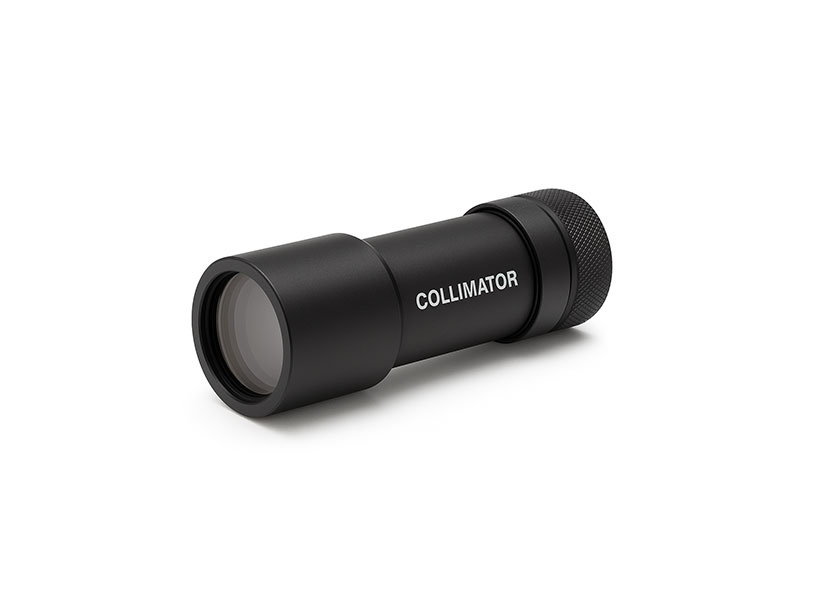
A collimator is more than just a beam straightener—it directly impacts system performance. By controlling beam shape and divergence, a collimator ensures consistent intensity and accurate targeting over the working distance.
Collimators facilitate seamless integration with various optical components like galvo scanners, sensors, or fiber-coupled systems, ensuring a consistent and dependable light source output. In industrial laser setups, fiber-optic communication, and scientific tools, a good collimator makes a significant impact. It helps ensure consistent results instead of erratic performance.
Lens-based designs are the most common, using single or multiple lenses to focus and straighten light. They are widely used in laboratory setups, optical experiments, and basic fiber-optic systems.
These collimators use reflective mirrors instead of lenses. They are ideal for high-power lasers or specific wavelengths like infrared (IR) or ultraviolet (UV), where lenses may absorb or distort the light.
Designed specifically for optical fibers, fiber optical collimators produce a well-collimated beam directly from the fiber tip. They are essential in fiber-optic communication, sensing, and precision microprocessing.
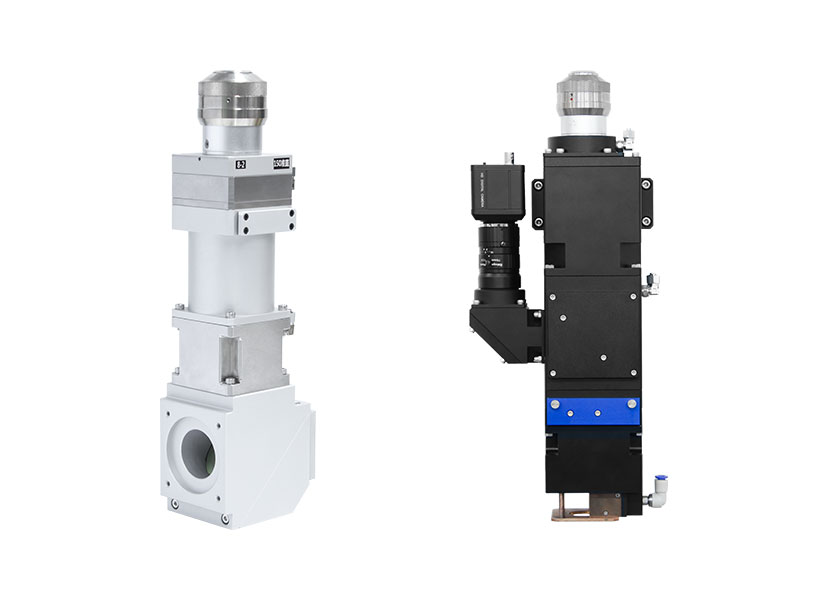
These units include mechanical mounts or housings for fine-tuning focus, alignment, or angle. In industrial laser systems, such units are often called Collimation Module, combining optical collimation with an integrated adjustable structure for ease of installation and stable operation.
Selecting the right collimator is critical for achieving optimal beam quality and system performance. Important factors include:
Beam Diameter and Divergence – Ensures the output beam stays well-collimated over the working distance.
Focal Length – Determines beam quality and working distance; longer focal lengths reduce divergence but require more space.
Wavelength Compatibility – Materials and coatings must match the laser type, whether visible, UV, IR, or fiber-coupled.
Adjustability – Fixed collimators are simple but less flexible, while modular units allow fine alignment for stable system integration.
Power Handling – For high-power lasers, mirror-based designs or specialized coatings prevent damage or degradation.
System Integration – Modular collimators or collimation modules simplify installation and provide a reliable, repeatable beam for industrial and scientific applications.
| Feature | Collimator | Collimation Module |
| Definition | A single lens or mirror that straightens a diverging beam | Combines a collimator with mechanical housing for stable, adjustable output |
| Adjustment | Usually fixed, limited alignment | Adjustable focus and alignment for precise tuning |
| Integration | Requires extra mounting for stability | Compact design for direct integration into systems |
| Beam Stability | Depends on external setup; sensitive to vibration | Mechanical structure ensures repeatable, stable beams |
| Use Cases | Lab experiments, fiber coupling | Industrial fiber lasers, scanning systems, precision measurement |
A collimation module is essentially a complete, ready-to-use system. It combines optical collimation with mechanical features for enhanced stability, adjustability, and reliability. This is perfect for fiber laser configurations, industrial scanning systems, and high-precision optical devices where preserving beam quality and dependable performance is essential.
Collimators and collimation modules are used in a variety of fields:
Industrial Laser Processing: Laser drilling, cutting, engraving, micromachining PCBs, or processing OLED materials.
Fiber-Optic Systems: Signal transmission, sensing, and low-loss fiber coupling.
Scientific Instruments: Optical measurements, laser imaging, and experimental research requiring precise and repeatable beams.
By choosing the right collimator or module, engineers can achieve consistent intensity, minimal divergence, and reliable performance, which directly improves system efficiency and product quality.
A collimator straightens diverging light, while a collimation module adds mechanical adjustments and housing for stable, repeatable beam output. Collimation modules are especially useful in fiber laser systems, industrial laser setups, and precision optical instruments.
For more information, check out the Scanner Optics Laser Collimation Module!
 zh-CN
zh-CN
 English
  日本語
日本語  한국어
한국어  français
  Deutsch
  Español
  italiano
  русский
  português
  tiếng việt