EMAIL US
sales@scanneroptics.com
During lithium battery manufacturing, from electrode processing and cell formation to final cleaning and welding, a variety of high-precision and high-efficiency processing technologies are required.
Traditional processing methods are gradually becoming unable to meet the requirements of modern battery production for accuracy, flexibility, and automation. With advantages such as non-contact processing, high precision, high speed, and easy integration with automated systems, laser processing in lithium battery manufacturing has become an important technology in the battery industry.
Currently, lithium batteries on the market mainly include three types: prismatic batteries, cylindrical batteries, and pouch batteries.
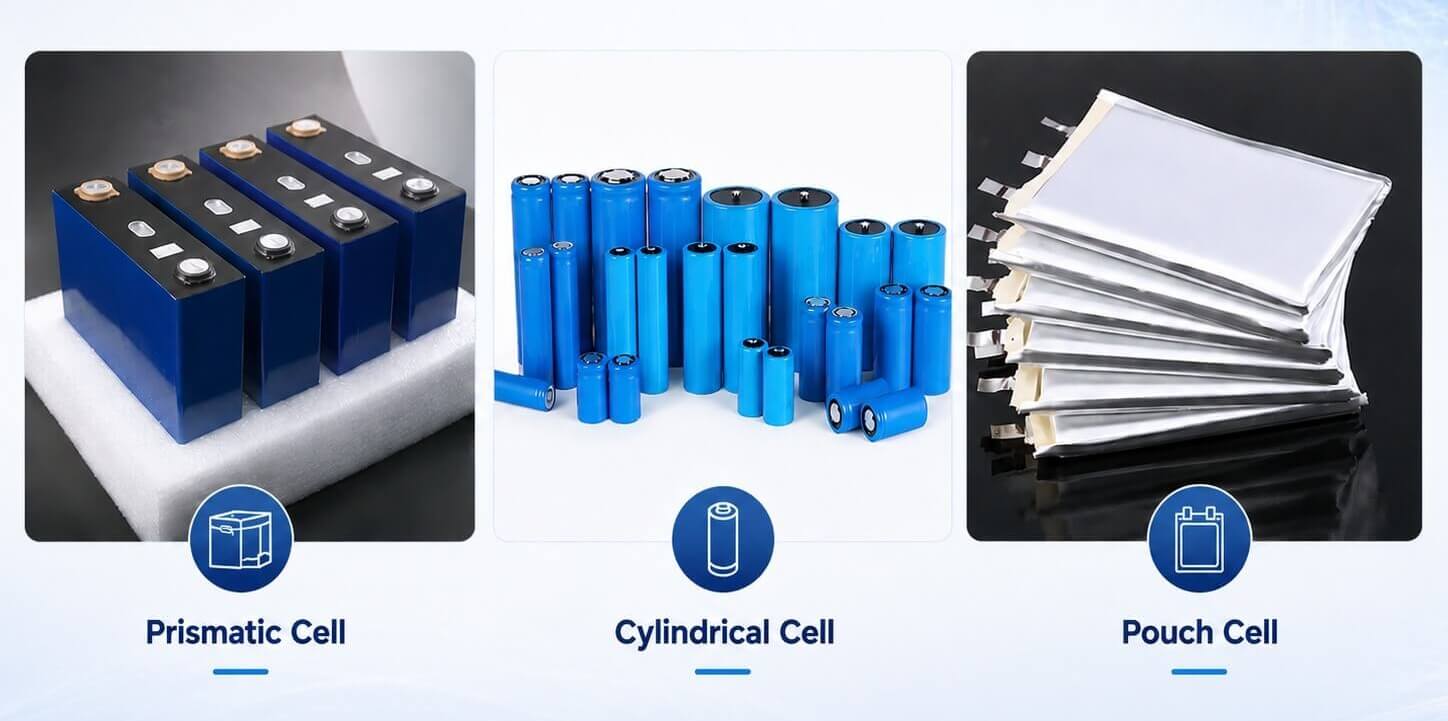
Prismatic batteries usually adopt aluminum or steel casing structures and are widely used in electric vehicles and energy storage applications. Depending on product requirements, prismatic batteries can be manufactured using winding or stacking processes, which provide different advantages in production efficiency and energy density.
Cylindrical batteries have been widely adopted in electric vehicles, power tools, and portable energy storage devices due to their mature technology and high level of automation.
Pouch batteries use aluminum-plastic film packaging and feature advantages such as lightweight design and high capacity. They are mainly used in applications with strict requirements for size and weight, including smartphones, drones, and intelligent robots.
Although different battery types have different structures, they all involve multiple precision manufacturing processes. This has driven the wide application of lithium battery laser processing technologies in the battery industry.
Electrode groove engraving is one of the important laser processing applications in lithium battery manufacturing. By using a high-enrgy laser beam to precisely ablate the surface of the anode material, micro-channels can be created in the active material layer. These channels increase electrolyte infiltration areas, accelerate lithium-ion exchange, improve battery charging efficiency, and shorten the formation process.
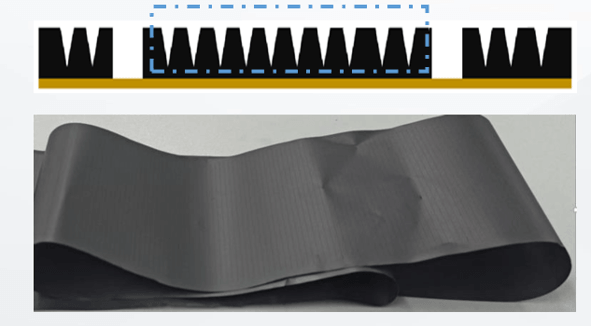
Since battery electrodes are usually manufactured through high-speed continuous production processes, this application places high demands on laser systems. During actual processing, the system needs to achieve stable high-power laser operation, high-speed continuous scanning, multi-galvo synchronization and stitching, as well as high processing consistency.
High-speed laser galvanometer scan head can provide scanning speeds exceeding 200 rad/s and work with multi-head control to achieve high-speed flying processing for electrode sheets with different widths. For large-format electrode processing, software-based synchronization of multiple galvo scanners is required to maintain low stitching errors and meet the requirements of power battery manufacturing.
During the manufacturing process of electric vehicle batteries, an insulating blue film is applied to protect battery cells and prevent electrical failures between battery modules.
However, defects may occur during the film application process due to various factors, requiring the removal of defective blue film.Compared with traditional cleaning methods, battery laser cleaning provides a non-contact process that can effectively reduce substrate damage while offering advantages such as environmental friendliness, no consumables, and easy automation integration.
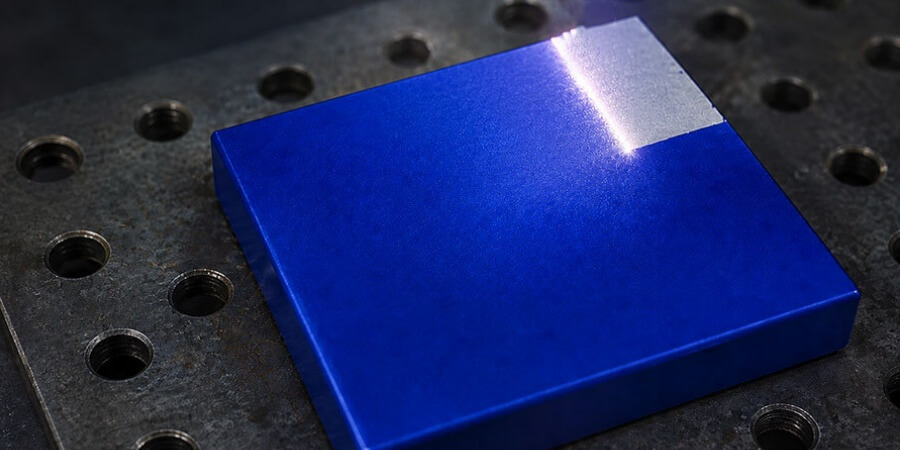
In addition to blue film removal, laser technology can also be applied to cleaning electrode tab welding areas. By removing coatings and contaminants from welding positions, laser cleaning improves surface cleanliness, enhances welding quality, and improves battery reliability.
With increasing safety requirements for new energy vehicles, insulation protection technologies for battery housings continue to evolve. Compared with traditional blue film wrapping methods, UV insulation coating combined with laser surface texturing technology can significantly improve coating adhesion and overall reliability.
By applying high-energy-density nanosecond laser pulses to metal surfaces, localized melting, vaporization, and rapid solidification occur, forming uniform microstructures on the surface. These microstructures enhance the bonding strength between insulation coatings and battery housings.
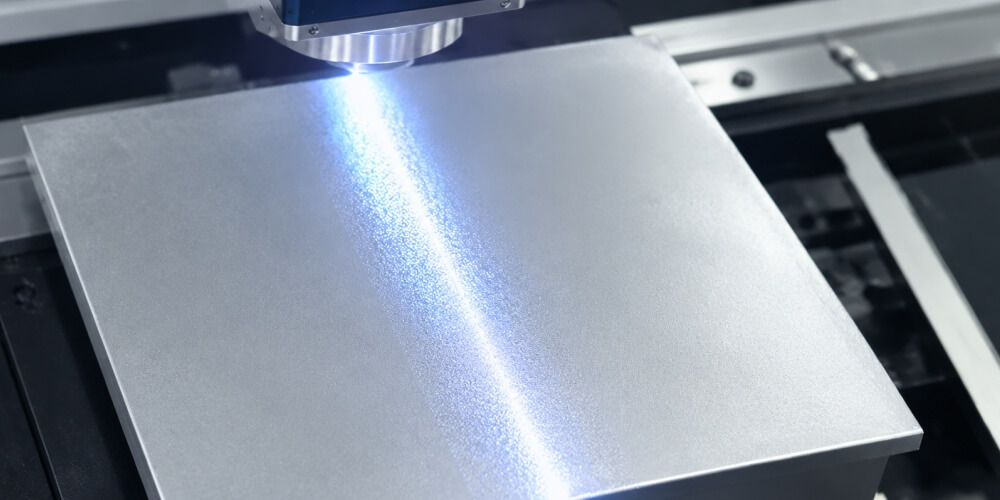
Compared with traditional blue film solutions, which typically provide bonding strength of 4–5 MPa, laser texturing-assisted coating processes can achieve structural strength exceeding 10 MPa. In addition, this technology provides better aging resistance, reduces the risk of leakage or short circuits caused by housing corrosion, lowers overall processing costs by approximately 40%, and can save around 5% space in battery PACK systems, further improving battery system safety and integration efficiency.
Stacked battery cells are manufactured by cutting coated positive and negative electrode sheets into designed sizes and then stacking them in the order of positive electrode, separator, negative electrode, and separator. This process forms a “sandwich” structure before being packaged into battery cells.
Due to advantages such as higher energy density, better internal structural stablity, improved safety, and longer cycle life, the stacking process is widely used in 3C steel shell batteries and power battery applications.
Compared with the winding process, stacked battery manufacturing requires each electrode sheet to be individually separated and handled, placing higher demands on equipment efficiency and process control. Meanwhile, with the development trend toward large-format prismatic batteries, improving stacking efficiency, controlling dust generation, and reducing burr formation have become important factors affecting large-scale production. With the continuous development and cost reduction of ultrafast laser technology, laser cutting for battery manufacturing is expected to further promote the large-scale adoption of stacked battery production due to its advantages of high precision, low damage, and flexible processing.
In the manufacturing process of steel shell batteries, laser welding has become an important precision joining technology due to its advantages of high energy density, a small heat-affected zone, and high automation capability. For some batteries with complex shapes or three-dimensional structures, such as customized steel shell batteries, welding along three-dimensional paths requires higher requirements for the motion accuracy and path control capability of the galvo scanning system.
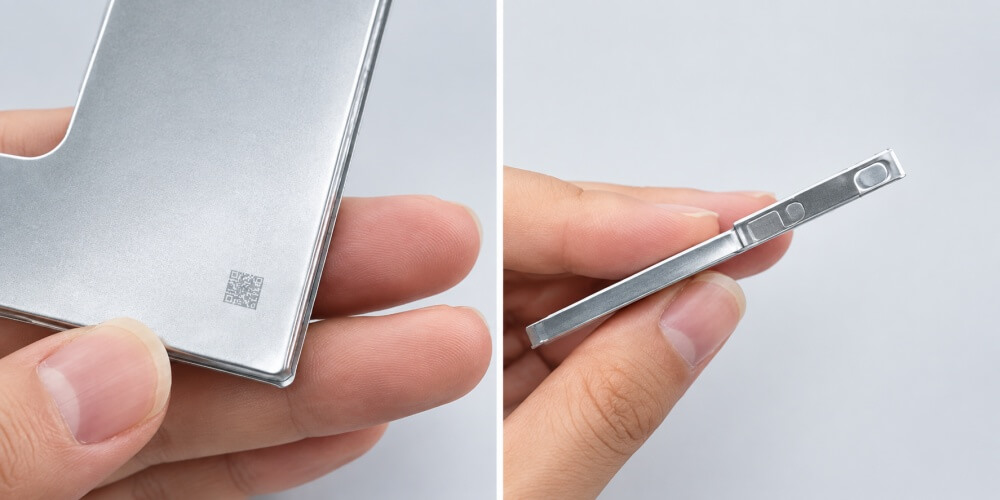
By combining vision inspection technology with galvo control systems, welding paths can be automatically generated according to variations in battery height. This enables precise welding of complex structures, improves production efficiency and processing consistency, and provides reliable support for large-scale steel shell battery manufacturing.
With the rapid development of electric vehicles and energy storage industries, lithium battery manufacturing processes continue to evolve. Laser processing, with advantages such as high precision, high efficiency, and excellent compatibility with automated production systems, has become an indispensable technology in lithium battery production.
From electrode groove engraving and laser cleaning to surface texturing, cutting, and welding, laser technology is helping battery manufacturers improve processing quality and production efficiency. Meanwhile, high-speed and high-precision galvo scanning systems are important components for ensuring stable laser processing performance.
Scanner Optics specializes in galvo scanning systems, laser control cards, and laser optics solutions, providing reliable products and technical support for lithium battery manufacturing applications and helping customers achieve more efficient and precise laser processing.
 zh-CN
zh-CN
 English
  日本語
日本語  한국어
한국어  français
  Deutsch
  Español
  italiano
  русский
  português
  tiếng việt